
This article draws on Creative Navy's project work in industrial and embedded interface design, spanning industrial robots, plant floor equipment across food, pharmaceutical, chemical, and materials manufacturing, industrial automation and control software, CAD/CAM systems, IoT platforms, and simulation software. Our work in this sector covers control room environments, plant floor operations, clean room manufacturing, and field deployment conditions: designing for process engineers, plant operators, maintenance technicians, and automation engineers. We work within the standards frameworks that govern these environments, including ISA-101 for HMI design, ISO 13849 and IEC 62061 for machinery safety, and IEC 61508 functional safety requirements, treating these as structural inputs to the design process rather than compliance checklists.
Key Statistics
- Programming a robotic arc welding system for a large vehicle hull takes more than eight months; the actual welding cycle runs 16 hours: a 360:1 ratio of programming time to execution time. (Robotics and Computer-Integrated Manufacturing, 2012; cited in industry commentary through 2025)
- There is one robotics engineer for every 11 factories in the US. (Ready Robotics / Wevolver, December 2020)
- As of January 2026, 58% of manufacturers cite total cost of ownership exceeding USD $200,000 per cell as the biggest barrier to robotic adoption. (Mordor Intelligence, January 2026)
- Training for a single proprietary robot programming environment costs thousands of dollars at a three-day baseline minimum; organisations managing mixed-brand fleets multiply this by 2 to 5 times. (Mecademic, September 2024)
- FANUC released Roboguide v10 in June 2025, the first version on 64-bit architecture in the product's history.
- Epson RC+ 8.0, released August 2024, is the first unified platform covering the full Epson robot lineup.
The gap between what a robot can do and what an operator can safely deploy is not a hardware problem. It is an interface problem. A peer-reviewed study in Robotics and Computer-Integrated Manufacturing found that manually programming a robotic arc welding system for a large vehicle hull takes more than eight months, while the actual welding process cycles in 16 hours. That 360:1 ratio of programming time to execution time is not a machinery limitation. It is the cost of interfaces built for engineers who wrote the software rather than for people who have to use it under production pressure.

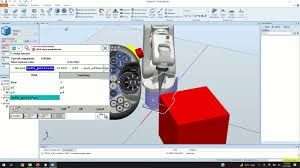
ABB robot control software UX
The stakes are concrete. As of January 2026, 58% of manufacturers cite total cost of ownership exceeding $200,000 per cell as their primary barrier to robotic adoption, according to Mordor Intelligence. Most of that cost sits in integration and programming, where the interface is the bottleneck.
This article reviews the UX design of four established robot programming platforms: ABB RobotStudio, FANUC Roboguide, Epson RC+, and B&R Automation Studio. It covers significant product changes through early 2026 and maps the new competitive entrants reshaping the landscape. The intended reader is a product director or senior PM in the mobile robotics space. The question is where the interface is leaving money on the table, and where the competitive vector is forming.
What This Review Covers
Four platforms cover the dominant OEM software in industrial robot programming: ABB RobotStudio (design, simulation, and cloud collaboration), FANUC Roboguide (motion simulation and CAD-library-based workcell design), Epson RC+ (programming, simulation, and GUI-building for the Epson lineup), and B&R Automation Studio (PLC and motion control programming for B&R hardware). Each has seen material change since 2022, or a conspicuous absence of change that is itself diagnostic.
The evaluation framework applied here is the Deployment Coherence Standard, a three-dimension assessment used to determine how much of a platform's design value carries over into actual deployment. The three dimensions are: workflow alignment (does the interface reflect how programming actually happens in a production environment?), constraint respecting (does the interface hold its coherence under real hardware, version, and performance conditions?), and skill portability (does expertise built here transfer, within the product or across robot brands?).
New entrants are covered separately. They are relevant because they are not competing on simulation fidelity or hardware integration depth. They are competing on the Deployment Coherence Standard's weakest dimension for established OEM tools: skill portability.
ABB RobotStudio
ABB maintained a quarterly release cadence through 2023 to 2025. Functionally, RobotStudio has extended its lead: collision-free path planning, improved move and rotate tools, a new jog TCP free-hand function in the 2025.1 release, and expanded cloud collaboration with branching. ABB published a vendor-authored account in 2025 claiming over 35 user feedback sessions and in-person visits to customers including SKF, Alfa Laval, and Jaguar Land Rover over the preceding two years. The cloud collaboration feature, described in Creative Navy's original 2022 analysis as apparently unique in the industry, has expanded. It is no longer a differentiator by claim alone.
The most consequential UX event in this period was not a feature. In the 2023.2 update, ABB redesigned the ribbon interface with flattened, monochromatic button styling, removing the colour-coded commands that users had relied on for visual scanning. The reaction on the official ABB RobotStudio forums was immediate and specific. Raymond Cornet, Manager at LUXROBOTIC Programming Sàrl, described the removal of button colours as causing time loss in locating commands and requested a classic style option. An anonymous user stated that approximately 15 to 20 daily RobotStudio users they knew all disliked the redesign. Another practitioner described reverting to a 2022 installation to recover the previous interface.
This warrants naming precisely. ABB removed a constraint-respecting design element: colour as a navigational aid for expert users working under time pressure. The replacement was cosmetically contemporary and operationally worse. ABB's community manager confirmed the design would stay but would be iterated based on feedback; practitioners were directed to raise concerns through local ABB offices rather than the public forum.
The onboarding failure is a separate problem. A first-time RobotStudio buyer in March 2024 (documented on robot-forum.com) reported tutorials on ABB's own website showing a different interface to the software they had installed, with key features greyed out or absent. Management had allocated four hours per day for the user to learn the software. The resolution required understanding undocumented system state requirements not surfaced in the UI at all.
RobotStudio's cloud collaboration is a genuine structural advance. What ABB did to its own workflow coherence in 2023.2 is a case study in how functional investment and interface damage can happen in the same product cycle.
FANUC Roboguide
FANUC released Roboguide v10 in June 2025: ribbon toolbar, floating and docking windows, improved graphics performance via 64-bit architecture, drag-and-drop robot configuration, and VR workcell simulation playback. FANUC positioned the redesign explicitly against mainstream CAD software conventions. The classic UI ships alongside the new one under a shared licence, giving existing users a migration path rather than forcing a switch.
The 64-bit migration matters more than the interface redesign. For years prior to v10, practitioners on robot-forum.com described performance degradation that no hardware upgrade could address. One user running an RTX 3080Ti workstation described Roboguide as "so old and terribly optimised" that newer hardware provided no benefit; another reported a basic workcell cycle taking 5 to 7 minutes to complete after a mandatory Windows 11 upgrade. The root cause in both cases was the 32-bit architecture constraint, and neither practitioner found the answer in official documentation.
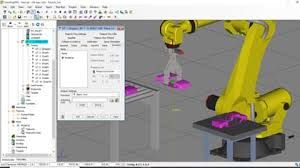
Fanuc robot control software UX
This is what sense decay looks like in a mission-critical professional tool: an interface that continues to absorb user resources in the form of workarounds, downgraded revisions, and community-sourced debugging while the vendor's release cadence focuses elsewhere. By the time FANUC shipped v10, the interest on this design debt had been compounding for years across the product's user base. Multiple practitioners described deliberately maintaining older Roboguide revisions, Rev K rather than Rev L or M, because newer versions introduced instability. Version incompatibility between Roboguide and physical robot firmware became a recurring source of workflow failure: one practitioner in 2023 spent a week in active communication with FANUC support to resolve a module loading error, ultimately reinstalling on a different machine and transferring the licence. The root cause was never identified.
V10 resolves the architectural bottleneck. Whether it resolves the coherence deficit between Roboguide's update model and the version management overhead it placed on practitioners is a harder question, and an open one.
Epson RC+
Epson RC+ 8.0, announced August 2024, replaces RC+ 7.0 as a unified platform covering the full Epson lineup: SCARA, 6-axis, and specialised products. Previously, different controllers required different software versions. The refreshed UI description is general, referencing "open structure" and "program templates" without specific detail on panel customisation. The non-detachable toolbar criticism from the 2022 analysis has not been specifically addressed in any public release documentation found.
The more structurally significant change is RC+ Express: a no-code, drag-and-drop development environment included at no additional cost alongside RC+ 8.0. Epson has restructured the platform's access model in a single release, moving from version-fragmented, expertise-required software to a tiered environment. Novice operators can work through RC+ Express; integrators retain the full programming depth of RC+ 8.0.
RC+ 8.0 is also available in a Lite edition at no cost. The core environment is still fairly dated by visual comparison. What has changed is the access structure around it, and that is the more consequential design decision.
B&R Automation Studio
No significant interface redesign, new version launch, or UX-specific announcements for B&R Automation Studio were identified for the period 2023 to 2026. B&R was acquired by ABB in 2017, but there is no public evidence of post-acquisition interface integration or redesign. The product page continues to describe the Generation 4 product with the same core architecture. Practitioner tutorial activity through 2023 to 2025 (soup01.com tutorial series) suggests the software remains in active use for PLC and motion applications, with no user commentary describing a materially changed interface experience.
The absence of change is not necessarily a failure. B&R Automation Studio serves a specialist audience for which interface stability is a value, not a deficit. Disrupting a stable, expert-appropriate interface without evidence-based justification would destroy the accumulated expertise encoded in current workflows. The ABB 2023.2 colour removal is the cautionary case. The distinction between deliberate stability and interface drift in professional tools matters enormously for long-lifecycle software, and it requires internal evidence to draw.
The honest assessment: insufficient public evidence exists to distinguish deliberate stability from neglect. Direct investigation of B&R's release changelogs would be needed to settle this.
The New Entrants
Three entrants outside the OEM ecosystem are reshaping the competitive context, each from a different direction.
RoboDK is a vendor-agnostic offline programming platform compatible with over 1,200 robot models from ABB, FANUC, Epson, KUKA, and others. Published in December 2025 as part of a comparative guide, RoboDK's primary competitive claim is cross-brand portability: expertise built here transfers across manufacturers. This directly addresses the structural frustration documented across practitioner accounts: years of investment in proprietary programming competency that cannot be reused if the robot brand changes or if the manufacturer's integrator relationship ends.
DELMIA Robotics (Dassault Systèmes) ranked first in ABI Research's technology vendor competitive rankings for robotics software as of early 2026. Positioned as part of the 3DEXPERIENCE platform with integrated CAD, CAM, and simulation in a single collaborative environment, DELMIA's competitive position is enterprise-scale deployments where OEM-specific tools create fragmentation across a mixed-brand robot portfolio.
NVIDIA Isaac Manipulator, launched October 2025, is a pretrained AI model with native ROS 2 integration. NVIDIA claims a 70% reduction in robot arm programming time as of January 2026 per Mordor Intelligence. That figure is a vendor claim without independent verification at time of writing. Whether or not the specific number holds, the category claim is structurally significant: AI-assisted programming is entering the robot software market from outside the OEM ecosystem.
These three entrants represent a competitive vector forming around the Deployment Coherence Standard's weakest dimension for established platforms: skill portability. The challenge facing OEM robot programming environments is directly analogous to what well-designed CFD simulation software had to solve: making expert tools serve a wider operator base without compromising the depth that existing specialists depend on. The OEM platforms have not answered this; the cross-brand platforms are building their case on exactly that gap.
| Platform | Workflow alignment | Constraint respecting | Skill portability | Notable 2025 change |
|---|---|---|---|---|
| ABB RobotStudio | High | Degraded (2023.2 UI) | Low | 2025.1 functional expansion; cloud collaboration extended |
| FANUC Roboguide | Moderate | Restored (v10, 64-bit) | Low | V10 June 2025; dual UI migration path |
| Epson RC+ 8.0 | Moderate | Stable | Low | Unified platform; RC+ Express no-code tier |
| B&R Automation Studio | Insufficient data | Likely stable | Low | No material change identified 2023 to 2026 |
| RoboDK | High | Variable by OEM compatibility | High | Cross-brand; December 2025 comparative guide |
| DELMIA Robotics | High (enterprise) | High | High | ABI Research number-one ranking, early 2026 |
Three patterns hold across all four established platforms.
First: every OEM platform offers high functional depth and low skill portability. Expertise is platform-specific. This is not a design accident; it is a business model. Proprietary programming environments create switching costs that protect the OEM's installed base. The operator and the manufacturer absorb the cost: multiplied training investment, integrator dependency, and a fleet that cannot be reprogrammed without specialist intervention.
Second: the platforms that changed their UI in this period did so primarily for aesthetic rather than operational reasons. ABB removed colour-coded navigation in the name of visual modernity. FANUC's v10 ribbon redesign aligns the interface to mainstream CAD software conventions. Neither change started from an analysis of how operators fail under real production conditions.
Poor UX in robot programming software compounds deployment timelines by multiplying the human cost of each programming task. The 360:1 ratio of programming to execution time documented for arc welding reflects interfaces organised around software architecture rather than operational workflow. When platforms further slow expert users through aesthetic UI changes, the compounding effect is direct: practitioners revert to older software versions and manage deliberate version downgrades to avoid instability introduced by upgrades.
Third: the constraint-respecting failures documented here are not surface-level UI problems. Roboguide's 32-bit performance limitation, version incompatibility with robot firmware, and RobotStudio's 2023.2 colour removal all represent a gap between stated capability and operational delivery. The interface and its surrounding infrastructure have drifted from the conditions under which operators actually work, while feature accumulation continued. This is sense decay operating across a product category.
In our experience reviewing professional software across industrial domains, the failure mode that product teams most consistently miss is the gap between task environments. The tool is evaluated against what it does in controlled demonstration conditions; the operator runs it in a production environment where version state, hardware configuration, and time pressure are all different from the demo. That gap does not appear in feature checklists. It appears in forum threads at 11 pm, and in the version that operators quietly refuse to upgrade to.
Why Complexity Defends Itself
The standard counterargument is that robot programming software is complex because robot programming is complex. The interface reflects the task. Simplifying it for non-specialists either compromises engineering capability or creates a false floor that breaks at the point of real integration.
This argument is correct about the task. It is wrong about the implication.
The evidence shows the complexity ceiling in current platforms is not set by the task; it is set by the interface. Roboguide was constrained by 32-bit architecture until June 2025. That is not a reflection of robot programming complexity. It is a consequence of engineering decisions made before most of the software's current operators were hired, compounding into a performance bottleneck that high-specification hardware could not solve. RobotStudio degraded daily expert productivity by removing a navigational aid that worked. That decision was about visual identity, not task fidelity.
The counterargument is also undermined by what new entrants are demonstrating. RC+ Express offers drag-and-drop for operators without programming backgrounds. RoboDK offers cross-brand portability that preserves operator investment rather than consuming it. Neither has removed engineering capability. Both have reduced the distance between user intention and productive output. That is what constraint respecting looks like in practice: a platform that understands which constraints it must respect and which it is imposing unnecessarily.
Principles for Product Directors
Three operational conclusions follow from this analysis.
Interface changes in expert software should start from failure mode analysis, not from aesthetic benchmarks. ABB's 2023.2 colour removal was apparently validated against visual design trends, not against documented task completion failure rates under production conditions. The result passed aesthetic review and degraded expert productivity. Before any interface change to a robot programming platform, establish a baseline for command location time and error rate under real conditions. The change should improve those metrics or not ship.
Product directors evaluating mobile robot programming software should assess three criteria beyond simulation fidelity: whether the platform's version migration model protects existing user expertise, whether skill portability is built into the design or absent by design, and whether the interface has been evaluated under real production conditions rather than optimised for visual benchmarks. These three factors determine the long-term deployment value of the software investment, and on current evidence, no single OEM platform answers all three clearly.
Skill portability is the question the OEM platforms are not answering. Every new hire who must learn a proprietary programming language from scratch is a cost that compounds across the organisation's robot fleet. Product directors evaluating platforms, or renegotiating vendor relationships, should treat skill portability as a first-order evaluation criterion alongside hardware compatibility. Cross-brand platforms are growing precisely because the OEM model has not answered this question.
No-code tiers do not replace engineering depth; they expand deployable surface area. Epson's RC+ Express and ABB's AppStudio do not remove the programming environment that integrators need. They add an operator-facing layer that non-specialists can use for standard tasks. The business case is direct: more of the robot's operational capacity becomes accessible without specialist intervention, and the total cost of each deployment is lower.
Limits and Gaps
This analysis is bounded by publicly available sources. Practitioner accounts come from specialist forum communities (robot-forum.com, ABB RobotStudio User Forums) and published press. They are specific and attributable but not statistically representative. B&R Automation Studio received the least evidence because its user community is smaller and less publicly vocal, not necessarily because it performs better or worse than the other platforms on the Deployment Coherence Standard.
The new entrant assessments rely heavily on vendor-published claims. NVIDIA's 70% programming time reduction figure is unverified at time of writing. DELMIA's ABI Research ranking is current as of early 2026; competitive rankings in robotics software shift quickly. Both should be treated as directional rather than definitive.
The 360:1 programming-to-execution ratio comes from a 2012 study specific to arc welding for large vehicle hulls. It is frequently cited in industry commentary through 2025 but applies to a specific domain and a specific programming method. Applying it as a general condition across robot programming contexts overstates the case. The study reliably illustrates the magnitude of the problem. It does not represent average programming overhead across all robot applications and task types.
The Deployment Coherence Standard applied here is an analytical framework, not a scored instrument. The ratings in the comparison table reflect evidence gathered through this review and should be treated accordingly.
What the Gap Actually Costs
A manufacturer with 40 robots across three brands, operating in a market where there is one robotics engineer for every 11 factories, cannot reprogramme its fleet when production requirements shift. The interface does not fail dramatically. It fails gradually: integration timelines extend, version workarounds accumulate, and the portion of robot capability actually accessible to the organisation shrinks relative to what was purchased.
This is the operational reality behind the 58% of manufacturers who cite total cost of ownership as their primary adoption barrier. The hardware is available. The constraint is not primarily hardware.
The competitive vector belongs to organisations willing to treat the interface as infrastructure rather than a feature layer. FANUC built v10's dual-UI migration path specifically to avoid forcing a relearning cost on existing users. Epson built RC+ Express to expand deployable surface without compromising the engineering environment. Both are partial answers. Neither has resolved the portability problem that cross-brand platforms are actively exploiting.
For a product director evaluating a robot software vendor, the question is not which platform has the most features. It is: which platform preserves the operational value of the investment made in human expertise? At current evidence, that question does not have a clear OEM-platform winner.
FAQ
How does poor UX in robot programming software affect deployment costs? The most direct measure is programming time relative to execution time. A study in Robotics and Computer-Integrated Manufacturing found that programming a robotic arc welding system for a large vehicle hull takes more than eight months against a 16-hour welding cycle. Training compounds the cost: three days minimum and thousands of dollars per platform (Mecademic, September 2024), multiplied by 2 to 5 times for organisations managing mixed-brand robot fleets. These are not one-time costs; they recur with every new deployment, every operator change, and every robot brand added.
Why did ABB's 2023.2 interface change generate practitioner backlash? ABB removed colour-coded button styling in the 2023.2 RobotStudio update, replacing it with a flattened monochromatic design intended to align with contemporary visual conventions. Daily expert users on the official ABB forums reported slower command location and longer task completion. At least one documented workaround was reverting to a 2022 installation. The change was made for aesthetic coherence; the productivity impact was not offset by any functional improvement for existing operators.
What is the Deployment Coherence Standard? The Deployment Coherence Standard is a three-dimension evaluation of robot programming interfaces: workflow alignment (does the interface reflect how programming happens under real production conditions?), constraint respecting (does the interface maintain its capability under actual hardware, version, and performance constraints?), and skill portability (does expertise built in this environment transfer within or across robot brands?). Current OEM platforms tend to score well on workflow alignment and poorly on skill portability, with constraint respecting showing the most variance across the field.
What should a product director look for beyond simulation fidelity? Three questions matter beyond features: how does the platform handle version transitions without forcing users to rebuild their working environment? Does it offer any skill portability across robot brands, or does operator expertise become a sunk cost if the hardware configuration changes? And was the interface evaluated under real production conditions, including hardware variability and version state? Platforms with no-code tiers and dual UI migration paths signal an awareness of these constraints that feature-depth-only competitors do not.
Is FANUC Roboguide v10 a significant improvement? The 64-bit architecture migration in v10 (June 2025) removes a documented performance bottleneck that hardware upgrades could not address. The dual-UI approach, shipping the classic interface alongside the new ribbon design, is a constraint-respecting migration path for existing users. Whether v10 resolves the version incompatibility and community support burden documented by practitioners in 2023 and 2024 requires sustained use data that is not yet available.
What are cross-brand robot programming platforms and why are they growing? Cross-brand platforms such as RoboDK, compatible with over 1,200 robot models as of December 2025, and DELMIA Robotics offer programming environments that work across manufacturers rather than locking operators to a single OEM toolchain. They are growing because skill portability, absent from OEM platforms by design, has become a material cost for manufacturers managing mixed-brand fleets. The competitive proposition is straightforward: operator expertise built in a cross-brand environment does not expire when the robot vendor changes.
References
ABB Robotics. (2025). Putting users first: how ABB's RobotStudio UX team builds customer-driven robotics software. ABB News Centre. https://new.abb.com/news/
ABB RobotStudio User Forums. (2023, June–July). Why the new appearance in Robotstudio 2023.2!? ABB Robotics Community Forum. [Forum thread.]
Creative Navy. (2022, December 16). Mobile robot software: UX design patterns and benchmarking. Medium. https://creativenavyux.medium.com/
ENCY CAD/CAM. (2026, January). Programming industrial robots: offline vs. online. https://www.ency.com/
FANUC Global. (2025, June). More powerful simulations and enhanced UI with FANUC ROBOGUIDE v10. https://www.fanuc.eu/
Freshworks. (2025). The hidden costs of software complexity. [Vendor-commissioned cross-industry survey, n = 706.]
Mecademic. (2024, September). How to use manufacturing robots with no programming training. https://www.mecademic.com/
Mordor Intelligence. (2026, January). Robot software market: industry analysis, size, share, growth, trends, and forecast. https://www.mordorintelligence.com/
Pan, Z., Polden, J., Larkin, N., Van Duin, S., & Norrish, J. (2012). Recent progress on programming methods for industrial robots. Robotics and Computer-Integrated Manufacturing, 28(2), 87–94. https://doi.org/10.1016/j.rcim.2011.08.004
Ready Robotics. (2020, December). 5 reasons programming robots is hard. Wevolver. https://www.wevolver.com/
robot-forum.com. (2024, February). Roboguide profiler missing and slow simulation [Forum thread]. https://www.robot-forum.com/
robot-forum.com. (2024, March). Robotstudio beginner [Forum thread]. https://www.robot-forum.com/
RoboDK. (2025, December). Which robot programming software is best for industrial automation? RoboDK Blog. https://robodk.com/blog/
In this story
A benchmarking review of ABB RobotStudio, FANUC Roboguide, Epson RC+, and B&R Automation Studio covering material UX changes through early 2026, new competitive entrants, and the Deployment Coherence Standard: the three dimensions that determine whether a robot programming interface actually delivers its capability in production.